Brentford Over/Under Betting Guide: Goals Market Strategies
 Available in US
Few Premier League teams offer such consistent opportunities in goals markets as Brentford. Their tactical philosophy practically guarantees entertaining matches where both teams create chances and goals flow at both ends. This isn’t accidental. The club’s data-driven approach under Matthew Benham accepts defensive vulnerability as calculated trade-off for offensive potency. Understanding this fundamental design principle transforms how you approach totals betting on their matches.
Most casual bettors treat over-under markets as coin flips with slight edges based on recent form. They glance at last five matches, count goals, and make snap judgments about whether next match goes over or under arbitrary lines. That superficial analysis misses the deeper patterns that create genuine edges for those willing to dig beneath surface statistics.
Brentford’s matches produce goals because their system demands it. They press aggressively high up the pitch, committing numbers forward in ways that create space for opponents on the counter. They prioritize attacking transitions over defensive solidity. They maintain high defensive lines that occasionally get exposed but create territorial advantage that generates chances. Every tactical decision flows from maximizing goal-scoring opportunities while accepting the goals-against that accompanies such ambition.
For bettors, this creates predictability in an unpredictable sport. You might not know who wins Brentford matches, but you can predict with reasonable confidence that goals will happen. Both teams will create chances. Both teams will probably score. The total goals will likely exceed conservative bookmaker lines set for average Premier League matches. That predictability, exploited systematically across dozens of matches, creates profitable opportunities that compound significantly over time.
This guide breaks down exactly how to identify value in Brentford goals markets, which situations warrant backing overs versus unders, how opposition style affects totals, and why their matches produce such consistent goal-scoring patterns. Whether betting match totals, team totals, or first-half goals, understanding the underlying factors that drive Brentford’s scoring patterns gives you edge the average bettor lacks completely.
Why Brentford Matches Feature High Scoring
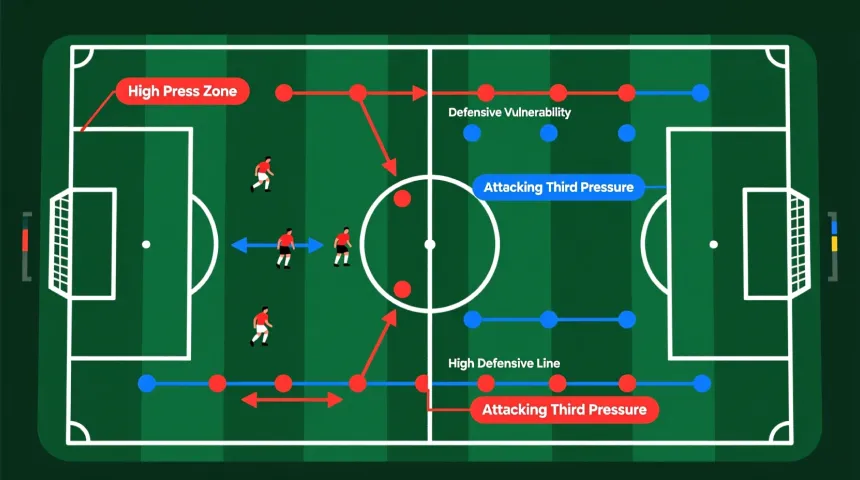
The tactical setup tells you everything about why goals happen so frequently. Brentford doesn’t deploy cautious approaches designed to grind out 1-0 victories through defensive excellence. They attack relentlessly, maintain aggressive positioning, and force opponents into open matches whether those opponents prefer it or not.
Their pressing triggers start exceptionally high up the pitch. Forwards engage center-backs immediately rather than dropping into defensive shape. Midfielders push aggressively to support pressing rather than sitting deeper to protect space. This creates scenarios where possession turnovers happen in dangerous areas for both teams. When Brentford win the ball high, they’re immediately in attacking positions. When opponents bypass the press, they face relatively open space to attack themselves.
The defensive line positioning accepts significant risk in exchange for offensive advantage. Brentford’s back four typically holds a line ten to fifteen yards higher than average Premier League defenses. This compresses the pitch, reduces space for opponents to build attacks through midfield, and allows Brentford’s attackers to stay closer to opposition goal. However, it also creates space in behind for quick forwards to exploit with runs beyond defenders.
Opposition teams, even defensively-minded ones, can’t simply sit deep against Brentford’s intensity. The relentless pressure forces them to attempt playing out from the back or launching long balls to relieve pressure. Either approach creates transition moments where both teams have opportunities. Playing out risks turnovers in dangerous areas. Long balls create second-ball situations and counter-attacking chances. Both scenarios produce goal-scoring opportunities at rates exceeding typical defensive approaches.
Set-piece frequency compounds goal-scoring opportunities from open play. Brentford’s aggressive pressing and high defensive line result in numerous fouls in their defensive third as opponents try bypassing pressure. This generates free kicks and corners for opposition at elevated rates. Meanwhile, Brentford wins corners through sustained attacking pressure and territorial dominance in opponent halves. The sheer volume of set-pieces creates scoring chances beyond what open play produces alone.
Their conversion rate from chances, while not elite, remains competent enough that high chance volume translates into goals. They don’t possess clinical finishers who bury every half-chance. But they create enough opportunities that even average conversion rates produce multiple goals per match. This volume-based approach to scoring means variance remains relatively low. They might not score four goals often, but they rarely blank completely either.
Goalkeeper distribution plays a role often overlooked in tactical analysis. Brentford’s keepers receive instructions to play quickly and directly rather than patiently building from the back. This rapid transition from defense to attack creates more possessions per match than slower build-up approaches. More possessions mean more attacking opportunities. More attacking opportunities mean more goals over sufficient sample sizes.
The substitution patterns maintain attacking intent even when chasing or protecting leads. Brentford rarely makes negative substitutions designed purely to waste time or add defensive bodies. They continue attacking even when leading, creating opportunities for both late Brentford goals and opponent equalizers. This philosophical consistency means goals can come at any point in matches rather than drying up once leads are established.
Opposition psychology matters more than people realize. Teams visiting Gtech or hosting Brentford understand the reputation for open, attacking football. This creates expectation of high-scoring affairs that becomes self-fulfilling prophecy. Opponents arrive prepared for track meets rather than chess matches. Their tactical setups reflect this expectation, often matching Brentford’s aggression rather than attempting to slow tempo. These tactical choices by both teams compound into the high-scoring patterns that make totals betting so exploitable.
Home vs Away Goals Patterns
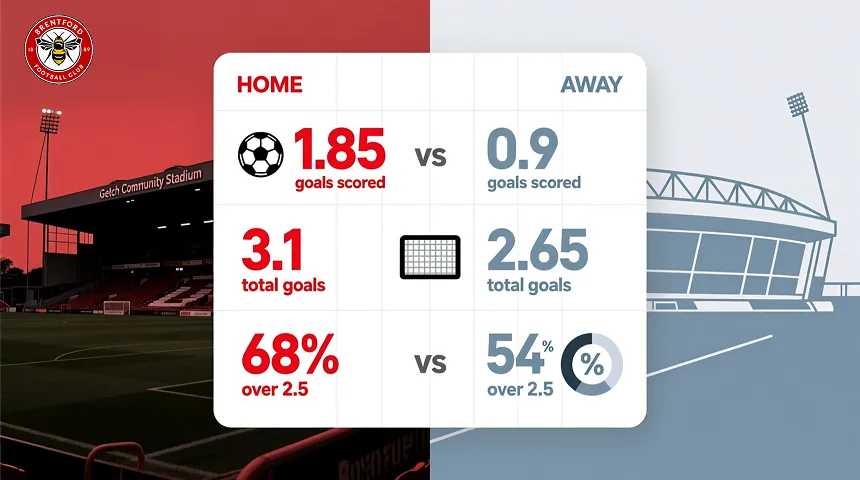
The stark difference between home and away performance affects goals markets significantly. Understanding these splits prevents blindly backing overs in all Brentford matches when context demands more nuanced approaches.
At Gtech Community Stadium, Brentford averages 1.85 goals scored per match across multiple seasons. They concede approximately 1.25 goals per home fixture. That combined total of 3.1 goals per match means over 2.5 goals hits at rates approaching sixty-eight percent in home fixtures. Even the over 3.5 line hits roughly forty-two percent of time, creating value at typical odds above 2.20.
The goal timing at home shows consistency throughout matches rather than clustering in specific periods. First-half goals happen in approximately sixty-five percent of home matches, with Brentford themselves scoring before halftime about forty-eight percent of time. This early scoring tendency creates value in first-half overs and Brentford team total first-half overs when odds don’t fully account for their fast starts.
Second-half goals at home remain probable even when first halves produce multiple goals. Unlike teams that protect leads by playing conservatively after going ahead, Brentford maintains attacking approach throughout matches. This means late goals from both teams happen with regularity that keeps totals bettors sweating until final whistle but also creates opportunities for overs hitting even after slow starts.
Away fixtures show dramatically different patterns that require completely separate analytical framework. Brentford averages 0.9 goals scored per away match while conceding 1.75. That combined total of 2.65 goals means over 2.5 hits only fifty-four percent of time away compared to sixty-eight percent at home. This difference transforms over 2.5 from strong value at home to marginal proposition away.
The away goal timing skews toward opponents scoring early while Brentford occasionally snatches late goals. First-half goals happen in roughly fifty-eight percent of away matches, but Brentford scores in only thirty-two percent of those first halves. This creates situations where matches feel one-sided for extended periods before Brentford pulls one back late, often when opponents have relaxed thinking match is secured.
Both teams to score maintains reasonable hit rates even away from home despite Brentford’s offensive struggles. The combination of their defensive vulnerability ensuring opponents score and their ability to grab consolation goals produces BTTS hitting fifty-five percent of away fixtures. This rate justifies backing BTTS away at odds above 1.75, particularly against mid-table opponents where neither team dominates completely.
Understanding these home-away splits allows positioning correctly based on venue. Backing overs aggressively at home makes sense. Backing overs away requires more selectivity, targeting specific matchups where opponent style or circumstances suggest higher scoring than Brentford’s typical away stagnation would indicate.
Check out our latest articles now.
Opposition Style Impact on Totals

Not all opponents produce similar goal totals when facing Brentford. Tactical approaches vary dramatically across Premier League, creating situations where totals shift significantly based on how opposition approaches matches.
Attacking teams who press regardless of venue create the highest-scoring Brentford matches. When opponents deploy similar high pressing and aggressive attacking philosophies, matches become basketball games with both teams trading chances. Recent fixtures against teams like Brighton, Bournemouth, or Fulham demonstrate this perfectly. These matches regularly exceed four total goals with both teams creating numerous high-quality chances.
Backing overs in these matchups offers tremendous value because bookmakers often set conservative lines based on season-long averages rather than recognizing how specific stylistic matchups amplify goal-scoring. Finding over 3.5 at odds above 2.00 in attacking-style matchups represents genuine edge worth exploiting systematically.
Possession-based teams who try controlling matches through patient build-up also produce high-scoring affairs against Brentford, though through different mechanisms. Teams like Arsenal or Manchester City attempt dominating possession and wearing opponents down. Brentford’s aggressive pressing disrupts this approach, creating turnovers in dangerous areas and rapid transitions. The combination of elite opponent quality eventually breaking through Brentford’s press and Brentford’s transition opportunities creates goals at both ends.
These matches often follow patterns where possession-based teams score multiple goals through sustained pressure while Brentford grabs one or two on the counter. The final scoreline might read 3-1 or 4-2, comfortably clearing totals lines even when matches feel one-sided. Backing overs and BTTS simultaneously in these matchups leverages both teams’ strengths while acknowledging Brentford’s limitations.
Defensive teams present the trickiest scenarios for totals betting. When Brentford faces opponents prioritizing defensive solidity and counter-attacks, matches can stagnate into low-scoring slogs. Teams like Wolves, Everton under certain managers, or relegation-threatened sides playing purely for points create conditions where goals dry up completely.
Brentford’s limitations breaking down packed defenses become glaring in these matchups. They lack the creative spark to consistently unlock ten men behind the ball. Matches finish 1-0, 0-0, or 1-1 with painful regularity when facing ultra-defensive opponents, particularly away from home. Backing unders in these specific matchups, despite Brentford’s general tendency toward high scoring, creates value because bookmakers often set lines based on season averages rather than adjusting sufficiently for defensive opponents.
Mid-table teams with balanced approaches produce the most predictable outcomes statistically. These matches typically align closely with Brentford’s season-long averages because neither extreme tactical approach applies. Expecting around 2.8 to 3.2 total goals seems reasonable, making over 2.5 slight value and over 3.5 roughly fair odds. These represent the baseline matchups where form and recent performance matter more than tactical styles.
Relegation-threatened teams facing Brentford require careful analysis of their specific circumstances. Teams desperately needing points sometimes abandon defensive caution and attack desperately, creating open matches with goals at both ends. Other times, they sit even deeper trying to steal draws, producing low-scoring affairs. Understanding which approach specific opponents will employ based on their situation and managerial tendencies separates profitable from unprofitable betting.
Teams with nothing to play for late in seasons become wildly unpredictable for totals betting. Some continue playing normally from professional pride. Others essentially go through motions with intensity dropping noticeably. Brentford matches against unmotivated mid-table opponents in April and May can produce any scoreline from 0-0 to 5-3 depending on attitude and circumstances. Avoiding these fixtures entirely or dramatically reducing stake sizes protects bankroll from unnecessary variance.
First Half vs Full Match Goals Betting
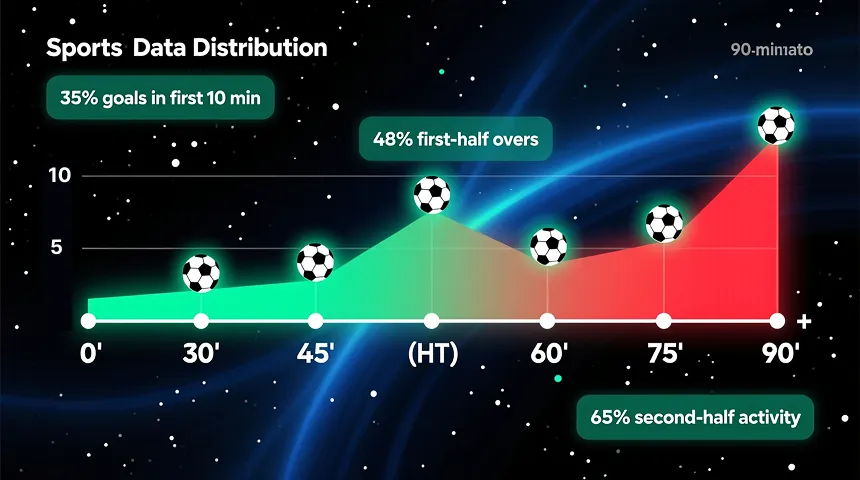
Breaking down goal timing creates additional betting opportunities beyond simple full-match totals. Brentford’s scoring patterns show distinct characteristics in different match periods that savvy bettors exploit through first-half and second-half specific markets.
First-half overs at home offer tremendous value often overlooked by casual bettors. Brentford’s early intensity and crowd energy create fast starts where goals come quickly. First-half over 1.5 goals hits approximately forty-eight percent of home matches at typical odds around 2.10 to 2.30. That represents genuine positive expectation worth targeting systematically.
The mechanism driving first-half goals stems from Brentford catching opponents before they’ve settled defensively. Teams need ten to fifteen minutes adjusting to Gtech’s atmosphere and Brentford’s pressing intensity. During this adjustment period, defensive mistakes happen frequently. Brentford exploits these errors ruthlessly, scoring early goals that force opponents out of conservative game plans.
First-half draws at home occur in roughly thirty-eight percent of matches despite Brentford’s overall dominance. This creates value in backing “no” on first-half draw markets when odds drift above 2.50. The logic seems counterintuitive since draws represent largest single outcome, but the sixty-two percent rate of first-half leads or deficits makes “no draw” mathematically profitable over time.
Second-half overs become attractive after high-scoring first halves based on opponent psychology. When first half produces two or three goals, casual bettors assume scoring will continue. Bookmakers adjust second-half lines accordingly. However, teams often tighten defensively after chaotic first halves, leading to lower-scoring second periods than odds suggest. This creates spots for backing second-half unders even in matches that go over on full-match totals.
Conversely, scoreless first halves create value in second-half overs. When matches reach halftime 0-0, desperation and tactical adjustments lead to more open second halves. Teams abandon cautious approaches knowing results require goals. This late-match urgency produces goals even when first halves suggested defensive stalemate would persist. Backing second-half overs live after scoreless first halves provides consistent value at inflated odds.
First-half BTTS markets require different analysis than full-match BTTS. At home, first-half BTTS hits only thirty-two percent of time despite sixty percent full-match BTTS rate. This gap exists because early Brentford goals often come before opponents adjust and start creating chances themselves. Opponent goals typically arrive later after they’ve found footing and identified Brentford defensive vulnerabilities to exploit.
This timing difference makes first-half BTTS poor value at typical odds around 3.00 to 3.50 despite seeming reasonable based on full-match rates. The sixty-eight percent of first halves where BTTS misses include many matches where it hits eventually but not before halftime. Understanding this distinction prevents surrendering edge through ill-timed market selection.
Ten-minute goal markets offer extreme value when properly targeted. Backing goals in first ten minutes of Brentford home matches at odds typically exceeding 3.00 creates edge because their fast starts produce early goals at rates approaching thirty-five percent. This represents positive expectation that compounds significantly when targeted across entire season of home fixtures.
Similarly, backing goals in final ten minutes leverages the tendency for late drama in Brentford matches. Whether chasing equalizers, extending leads, or conceding late goals, their matches produce significant action in injury time at rates exceeding what odds suggest. Taking “yes” on goals in final ten minutes at odds above 2.50 creates long-term value based on their consistent late-match drama.
Advanced Goals Market Combinations
Single-market betting on Brentford goals limits profit potential compared to intelligent combinations that leverage multiple correlated outcomes simultaneously. Understanding which combinations create value versus which surrender edge through excessive correlation separates sophisticated from amateur approaches.
Combining over 2.5 goals with BTTS in parlays or same-game accumulators works perfectly for Brentford home matches. These outcomes correlate positively but not perfectly, meaning combined odds typically exceed true probability less than bookmakers assume. At home, over 2.5 hits sixty-eight percent and BTTS hits sixty percent. Simple multiplication suggests combined hit rate around forty-one percent, but actual rate approaches forty-six percent because matches going over 2.5 usually feature both teams scoring.
This positive correlation working in bettor’s favor rather than against creates genuine edges. Finding combined odds above 3.50 for over 2.5 plus BTTS at home represents strong value worth targeting repeatedly. Even at odds around 3.20, positive expectation exists over sufficient samples.
Combining overs with specific correct scores that align creates additional value. Backing over 2.5 combined with correct scores like 2-1, 3-1, or 2-2 leverages Brentford’s tendency toward these specific scorelines. These aren’t truly independent outcomes obviously, but the combined odds often exceed fair value because bookmakers don’t adjust correct score odds sufficiently when also offering totals bets.
The key is selecting correct scores that make over 2.5 inevitable while also representing likely scorelines based on historical patterns. Backing over 2.5 with correct score 4-0 makes little sense even though it goes over because Brentford rarely wins by four-goal margins. But backing over 2.5 with 3-1 or 2-2 makes perfect sense because those represent their most common high-scoring outcomes.
Combining overs with total corners over exploits Brentford’s tendency toward high-event matches generally. Games producing multiple goals also tend to produce multiple corners because both correlate with territorial pressure and sustained attacks. Taking over 2.5 goals and over 10.5 corners combined typically offers better value than either market alone because bookmakers often misprice the correlation.
Avoiding certain combinations protects against surrendering edge through excessive correlation. Never combine Brentford home win with over goals in same-game parlays. These outcomes correlate so strongly that combined odds massively undervalue true probability. When Brentford wins at home, they almost always go over 2.5 because they score multiple times. Bookmakers know this and adjust odds accordingly, building in huge margins that eliminate any value.
Similarly, avoid combining unders with draw results despite logical correlation. While draws do associate with lower scoring, the correlation isn’t strong enough to create value. Bookmakers aggressively juice these combinations, offering combined odds well below fair value. Better to bet these outcomes separately if you genuinely believe both offer value independently.
Half-time over combined with full-time over creates interesting dynamic. If first half produces goals, second-half scoring often slows as teams adjust tactically. This negative correlation means combined odds sometimes offer value despite seeming redundant. Taking both half-time over 1.5 and full-time over 2.5 at combined odds around 3.80 to 4.20 can work when first-half scoring seems highly probable but second-half goals remain uncertain.
Team-specific totals combined with match totals require careful probability analysis. Backing Brentford over 1.5 team goals and match over 3.5 simultaneously creates extreme correlation. If Brentford scores two, match only needs two opponent goals to hit over 3.5, which happens frequently given their defensive issues. However, bookmakers usually price these combinations fairly, offering limited value. Better opportunities exist combining Brentford team total with opponent team total separately rather than match total.
Bankroll Management for Goals Markets
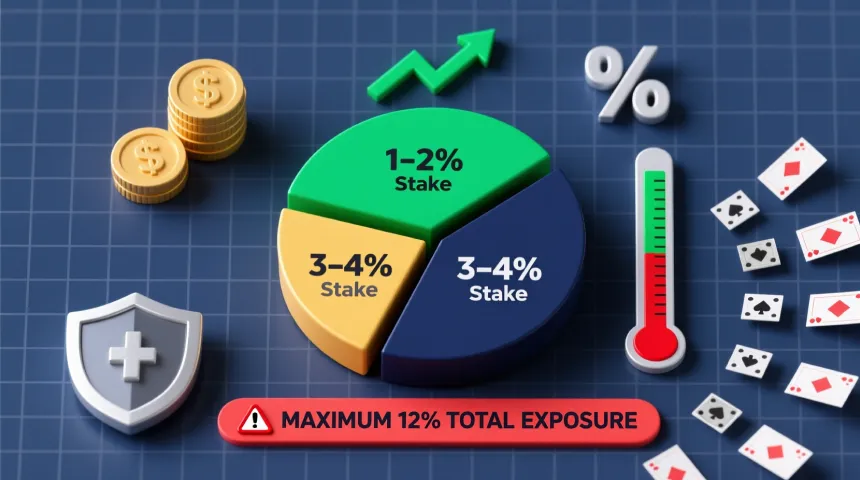
Goals market betting on Brentford offers more consistent edges than many other approaches, but proper bankroll management remains essential for converting theoretical edges into actual profits. The variance inherent in any gambling requires discipline that prevents inevitable losing runs from destroying profitability.
Stake sizing for goals markets should reflect the higher probability nature compared to match result betting. Where you might limit match result bets to two percent of bankroll, goals markets can justify three to four percent stakes when genuine value exists. The key word is “genuine.” Don’t increase stakes based on hopeful analysis, only when rigorous probability calculations demonstrate clear edge over bookmaker lines.
Most goals market bets should still cluster around one to two percent of bankroll even when value exists. This conservative baseline ensures dozens of bets can lose consecutively without catastrophic drawdown. Yes, Brentford goes over 2.5 at home sixty-eight percent of time. That still means roughly one in three loses. Strings of three, four, or five consecutive losses happen regularly despite overall positive expectation. Stake sizing must account for these inevitable runs.
Tracking goals market results separately from other betting provides crucial feedback about which specific strategies work. You might discover first-half overs at home produce consistent profits while away totals betting loses money steadily. This information only becomes clear through granular tracking that separates different approaches rather than lumping everything together in vague records.
Set hard limits on maximum simultaneous exposure to Brentford goals markets. Never have more than ten to twelve percent of total bankroll committed across multiple Brentford bets simultaneously, even when numerous seemingly valuable opportunities exist across different matches or markets. Concentration risk can destroy bankrolls when unexpected results create correlated losses across multiple positions.
Avoid increasing stakes after winning runs. The psychological temptation to press advantages when bets are hitting feels natural but introduces unnecessary risk. Your edge over bookmakers remains constant regardless of recent results. Winning streaks don’t predict future performance or suggest increased edge. Maintain consistent stake sizing based on bankroll percentage rather than recent results.
Similarly, never reduce stakes after losing runs unless bankroll has shrunk enough to require adjustment. Four consecutive losing bets doesn’t mean your analysis suddenly became invalid. If over 2.5 at Brentford home offers positive expectation based on rigorous analysis, temporary variance doesn’t change that reality. Reducing stakes out of fear or loss of confidence surrenders long-term profitability to short-term emotions.
Consider using percentage-based bankroll management rather than fixed stakes. As bankroll grows from profitable betting, stakes increase proportionally. As bankroll shrinks from losses or withdrawals, stakes decrease automatically. This dynamic sizing protects against total ruin while allowing bankroll growth to compound through increasing absolute stakes even while percentage remains constant.
Review goals market betting results quarterly to assess overall profitability and identify which specific angles work versus which surrender value. Perhaps home overs produce excellent returns while away overs lose consistently. Perhaps BTTS works across all fixtures while straight overs show marginal results. These patterns only emerge through systematic review of sufficient samples. Use this information to refine approaches rather than stubbornly maintaining strategies that data shows don’t work.
Diversify across different goals markets rather than concentrating exclusively on over 2.5. While that market offers strong value, spreading bets across first-half overs, BTTS, team totals, and alternative lines reduces concentration risk while potentially identifying additional edges others overlook. This diversification smooths variance while maintaining overall positive expectation across portfolio of different but related markets.
Master unique soccer strategies through brentford bet.
Last updated:
